Zero-waste lifestyle in a US city might feel like trying to swim upstream in a river of plastic. We get it. You step outside your apartment and you’re immediately met with a barrage of convenience culture—single-use coffee cups, flyers slapped onto poles, and enough Amazon boxes in the lobby to build a small fort. But here’s the kicker: the city is actually the best place to make a change. You have the density, the resources, and the community to make a low-waste life not just possible, but actually pretty fun.
Living a zero-waste lifestyle in a US city is less about being a perfect minimalist and more about being a conscious citizen. It’s about looking at the systems around you and figuring out how to bypass the “trash-heavy” ones. Whether you’re in a walk-up in Brooklyn, a condo in Austin, or a studio in San Francisco, the principles remain the same: refuse what you don’t need, reduce what you do, and find a way to keep the rest out of the landfill.
Understanding the Urban Waste Landscape
Before we dive into the “how-to,” let’s talk about the “why.” In the United States, the average person generates over four pounds of trash every single day. In a dense city, that adds up to a logistical nightmare. Landfills are getting further away, and the carbon footprint of hauling that trash is massive. When you commit to a zero-waste lifestyle in a US city, you aren’t just saving a plastic bag; you’re reducing the strain on municipal systems that are already pushed to the brink.
Most city waste comes from three main areas: packaging, food scraps, and “fast” goods (like clothes and cheap home decor). By targeting these three sectors, you can eliminate about 80% of your personal waste without ever feeling like you’re living in a cave. It’s about working smarter, not harder.
The Kitchen: Where the Revolution Starts
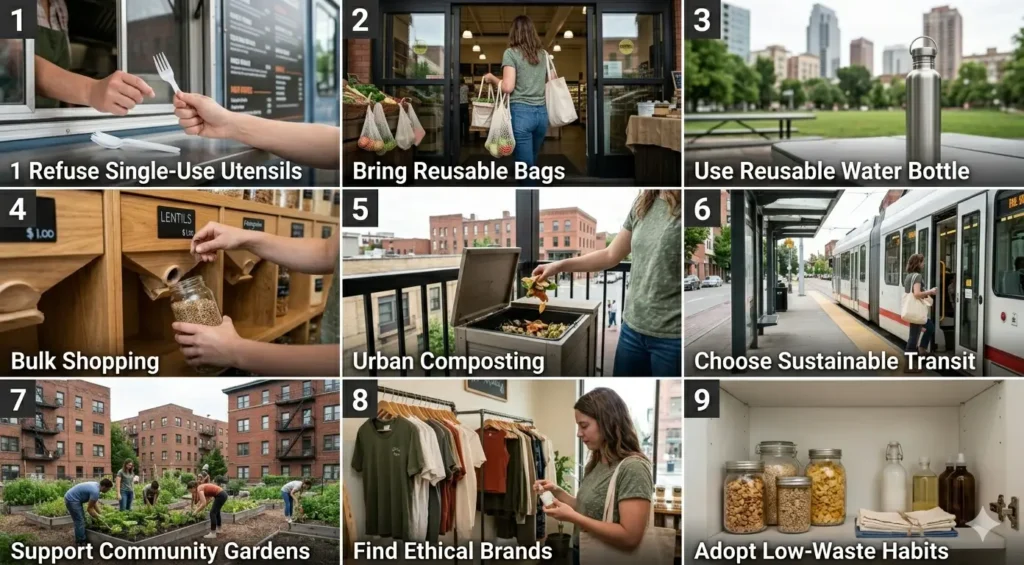
The kitchen is the heart of the home, but it’s also the primary source of trash. To master a zero-waste lifestyle in a US city, you have to rethink how you eat. This starts with bulk shopping. If you’re lucky enough to live near a Whole Foods, a Sprouts, or a local food co-op, the bulk aisle is your new best friend. You can get everything from olive oil and honey to rice, pasta, and even laundry detergent in bulk.
The trick is the “jar method.” Keep a stash of clean glass jars. Before you fill them, take them to the customer service desk to get them weighed—this is called the “tare weight.” They’ll mark it on the jar with a grease pencil, and the cashier will subtract that weight at checkout. This is the gold standard of plastic-free living. No bags, no boxes, no plastic ties. Just food and the glass it came in.
The Magic of Local Farmers Markets
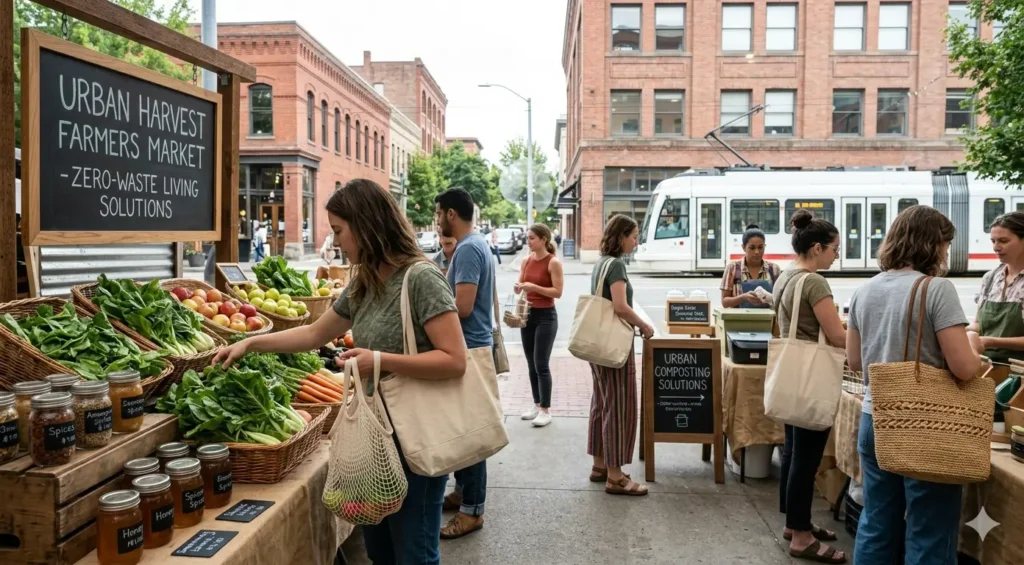
Every major US city has a weekend farmers market. This is your secret weapon. When you shop at a farmers market, you’re cutting out the middleman and the excessive packaging that comes with big-box grocery stores. Most produce at the market doesn’t have those annoying little plastic stickers, and it’s rarely wrapped in cling film.
To keep your zero-waste lifestyle in a US city on track, bring your own mesh produce bags. If you see berries in plastic clamshells, ask the farmer if you can pour the berries into your own container and give them the plastic back. Most local growers are happy to reuse them. Plus, you’re supporting the local economy and getting food that actually tastes like food, not cardboard.
Mastering Urban Composting in Small Spaces
Food waste is the “heavy” part of your trash. When it goes to a landfill, it rots without oxygen and creates methane, a greenhouse gas that’s way worse than CO2. If you want to live a zero-waste lifestyle in a US city, you have to find a way to compost. Many people think you need a backyard for this, but that’s a total myth.
Check if your city has a curbside organics collection program. Cities like Seattle and San Francisco are leaders in this. If not, look for a “scraps drop-off” at your local farmers market or community garden. You can keep a small, airtight bin in your freezer to store scraps like onion skins, coffee grounds, and eggshells so they don’t smell. Once a week, just drop them off. If you’re feeling extra “granola,” look into a worm bin (vermicomposting). It’s quiet, odorless, and fits under a kitchen sink.
Zero-Waste Apartment Hacks for Tight Spaces
Living in a city often means living small. You don’t have space for a 24-pack of paper towels from Costco. This is actually a blessing in disguise for a zero-waste lifestyle in a US city. Swap paper towels for “un-paper” towels—just old cotton rags or dedicated cloth wipes. Keep a basket for clean ones and a bag for dirty ones. Toss them in with your regular laundry, and you’ve just eliminated a huge source of paper waste.
Another great hack is the “refill station.” Instead of buying new bottles of dish soap, hand soap, and shampoo every month, find a local refill shop. These are popping up all over the US. You bring your old bottles, fill them up by the ounce, and pay for only the product. It’s cheaper, and it keeps dozens of plastic bottles out of the ocean every year.
Bathroom Basics and Personal Care
The bathroom is a plastic minefield. From toothpaste tubes (which are almost impossible to recycle) to plastic razors, it’s a mess. To transition to a zero-waste lifestyle in a US city, start by swapping your plastic toothbrush for a bamboo one. When the bristles wear out, you can compost the handle.
Switch to bar soaps instead of body wash. Bar shampoo and conditioner are also game-changers—they last longer, take up less space, and come in zero packaging. For shaving, an old-school safety razor is the way to go. The blades are metal and fully recyclable, and you’ll save a fortune over those expensive multi-blade cartridges. These reusable alternatives might seem small, but they add up over a lifetime.
Sustainable City Transit: Moving Without the Mess
If you live in a place like Chicago, Philly, or DC, you know that traffic is a nightmare. Luckily, a zero-waste lifestyle in a US city goes hand-in-hand with sustainable city transit. Taking the bus or the train is significantly better for the planet than driving a personal vehicle. It’s about sharing the footprint with hundreds of other people.
If you can, make walking or biking your primary mode of transport. Many US cities have invested heavily in bike lanes and bike-share programs (like Citi Bike in NYC or Divvy in Chicago). If you’re worried about hills or getting sweaty before work, e-bikes are a fantastic middle ground. They allow you to ditch the car without the heavy workout.
Ethical Consumerism and the “Buy Nothing” Movement
In a city, someone is always moving. This creates a massive secondary market for goods. Before you hit “Buy Now” on a new piece of furniture, check out your local “Buy Nothing” group on Facebook. These are hyper-local communities where people give away stuff for free just to keep it out of the trash.
Embracing the circular economy is key to a zero-waste lifestyle in a US city. Thrifting isn’t just for vintage clothes; it’s for kitchenware, electronics, and books. Shops like Goodwill, Salvation Army, or local independent boutiques are goldmines. You’re giving a second life to an object that’s already been manufactured, which is the ultimate “reduce and reuse” move.
The Challenge of Takeout and Delivery
Let’s be real: city life is fast, and sometimes you just don’t have the energy to cook. Takeout is the Achilles’ heel of a zero-waste lifestyle in a US city. The plastic containers, the tiny soy sauce packets, the plastic-wrapped napkins—it’s a lot.
To fight this, try to frequent restaurants that use compostable packaging (like cardboard or molded fiber). When ordering through apps, always check the box that says “No Utensils.” Keep a “go-bag” in your backpack or purse with a cloth napkin, a set of bamboo utensils, and a stainless steel straw. It’s a tiny bit of preparation that prevents a huge amount of single-use waste.
DIY Cleaning Products: Simple and Cheap
Most cleaning products are 90% water and 10% harsh chemicals packaged in thick plastic. You can bypass all of that and save some serious cash. A zero-waste lifestyle in a US city is easily supported by a few basic ingredients: white vinegar, baking soda, and essential oils.
A 50/50 mix of vinegar and water works on almost every surface in your apartment. Baking soda is a miracle for scrubbing sinks and tubs. By making your own DIY cleaning products, you control the ingredients and eliminate the need for specialized plastic bottles for every single corner of your home. It’s simpler, safer for your indoor air quality, and totally waste-free.
Fashion and Textile Recycling
Fast fashion is one of the world’s biggest polluters. In a city, it’s easy to get caught up in the latest styles. But a zero-waste lifestyle in a US city demands a “slow fashion” approach. Buy higher-quality clothes that last, and learn basic mending skills. A lost button shouldn’t mean a trip to the trash can.
If you have clothes that are truly beyond repair (holey socks or stained shirts), don’t throw them in the bin. Look for textile recycling drop-offs. Many cities have bins at farmers markets or dedicated centers that take old fabric and turn it into insulation or industrial rags. This keeps fibers in the loop and out of the landfill.
E-Waste and Modern Electronics
We live in a digital age, and gadgets die. E-waste recycling is a critical part of the zero-waste lifestyle in a US city. Never throw a battery or an old phone in the regular trash—they contain heavy metals that leak into the groundwater.
Most major electronics retailers (like Best Buy) have free recycling programs for cables, phones, and computers. Some cities also hold “Hazardous Waste” days where you can drop off old paint, batteries, and lightbulbs. It’s an extra trip, but it’s the responsible way to handle the “invisible” waste of urban life.
Navigating Social Pressures and “Zero-Waste Guilt”
The hardest part of a zero-waste lifestyle in a US city isn’t the trash—it’s the social aspect. When you’re out with friends and they hand you a plastic cup at a bar, or you’re at a birthday party with paper plates, it’s easy to feel like you’re failing.
Here’s the truth: we don’t need one person doing zero-waste perfectly. We need millions of people doing it imperfectly. If you end up with a piece of trash, don’t sweat it. Just make a mental note for next time. Focus on your low-waste habits and lead by example. Most people will be curious, not judgmental, when they see you using your own coffee tumbler or refusing a straw.
Community Gardens and Urban Greening
If you’re craving a connection to the earth while living in a high-rise, look for a community garden. These are incredible hubs for a zero-waste lifestyle in a US city. They offer a place to compost, a place to grow your own herbs (saving you those plastic-wrapped grocery store bunches), and a place to meet like-minded people.
Urban gardening helps reduce the “heat island” effect in cities and provides a habitat for pollinators. Even a small window box of basil or mint can reduce your reliance on store-bought, packaged herbs. It’s about reclaiming a bit of self-sufficiency in the middle of the metropolis.
Conclusion: The Future is Low-Waste
Building a zero-waste lifestyle in a US city is an act of rebellion against a “throwaway” culture. It’s about valuing quality over quantity and community over convenience. From bulk shopping at the co-op to using sustainable city transit, every choice you make sends a signal to the market that you want something better.
Start small. Maybe this week you just stop using paper towels. Next week, you find a place to drop off your compost. The week after, you tackle your bathroom plastic. Over time, these small shifts become second nature. You’ll find that your life feels lighter, your apartment feels cleaner, and you’re more connected to the city you call home. Progress over perfection—that’s the urban zero-waste way.
Disclaimer
This article is for informational purposes only. While we aim to provide accurate and helpful advice on sustainable living, waste management policies and recycling capabilities vary significantly by city and municipality. Always check with your local waste management authority for specific guidelines in your area. Additionally, some DIY recipes or lifestyle changes may not be suitable for everyone; use your own discretion and consult professionals when necessary.

Blogger Nitin
Hello, my name is Nitin, and I am a Blogger and Content Writer. I have 6+ years of experience in the IT field. I started working in the blogging field in 2023. I write content on trending topics and facts, and I also work as a freelancer.