Facing a massive organic search reach drop 2026? Learn how to beat zero-click search, rank in AI Overviews, and pivot to Generative Engine Optimization strategy.

If you’ve logged into your Google Search Console lately and felt a cold pit drop straight into your stomach, you are not alone, brother. Across the country, small-town bloggers, niche publishers, and big-city content creators are staring at the exact same horror show: a steep, unforgiving slide in traffic. The organic search reach drop 2026 has arrived like a brutal winter storm, leaving independent websites wondering if the golden era of writing for the web is gone for good.
Let’s skip the fancy corporate sugarcoating and the tech-conference buzzwords. The old playbook of writing a basic 800-word article, sprinkling some keywords, and watching the ad dollars roll in is officially dead. But does that mean blogging itself is six feet under? Absolutely not. It just means the rules of the game have radically shifted under our feet. Grab a cup of coffee, sit back on the porch, and let’s talk about how we can save your traffic, adapt your site, and beat the algorithms at their own game.
The Reality Behind the Organic Search Reach Drop 2026
The 2026 Truth: Traditional organic click-through rates (CTR) for top informational spots have plummeted by up to 30% to 50% because Google’s AI answers now occupy 60% to 80% of the screen above the fold on mobile and desktop alike.
The primary driver behind the massive organic search reach drop 2026 is the global integration of AI-powered search modes and instant summarizations. Google is no longer just a digital directory pointing people to external links; it has transformed into an answer engine that aggregates information on the spot.
When users can find the exact answer to their questions without ever leaving the search page, they don’t click. This structural change has fundamentally altered how independent publishers survive online, forcing us to rethink how we display value to both human readers and machine crawlers.
What is Zero Click Search Optimization?
What is zero click search optimization? It is the strategic practice of formatting web content so search engines can easily pull it into instant answer boxes, featured snippets, and conversational interfaces. Instead of fighting for clicks, creators optimize to ensure their brand, data, or product is the primary answer displayed directly on the search engine results page.
To protect your site from being wiped out by the organic search reach drop 2026, you have to accept that zero-click searches are the new normal. If the user isn’t going to click through to your site, your goal changes: you need your brand name, short summary, or product embedded so deeply into that answer that your authority remains undeniable.
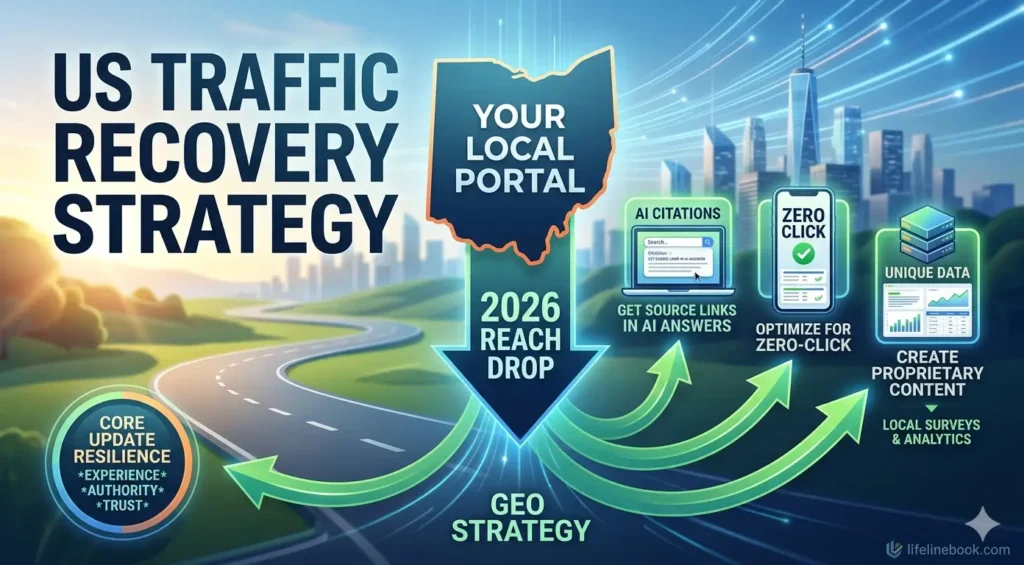
Core Pillars of Zero-Click Mastery
Modular Content Architecture: Write text blocks that stand perfectly on their own. Avoid burying the main point under three paragraphs of storytelling.
Entity-First Structuring: Clearly define people, places, things, and concepts using clear noun-verb sentences so machine learning parsers can map your data instantly.
Visual Trust Anchors: Incorporate highly detailed, proprietary images or data tables that AI summaries cannot easily replicate in plain text format.
How Do AI Overviews Affect SEO?
How do ai overviews affect seo? They push traditional blue links far down the page, significantly reducing organic traffic for standard informational articles. However, they also introduce a new visibility metric where sites cited inside the AI snapshot receive an average 120% increase in highly targeted click-through value.
The shift toward automated overviews means that being ranked #1 in traditional search results doesn’t guarantee a flood of visitors anymore. The real property value on the internet has moved inside the conversational answers.
| Metric | Pre-AI Search Era | 2026 AI Search Era |
| Average Position 1 CTR | ~31.7% | ~8% to 12% (On AIO Queries) |
| Zero-Click Search Rate | ~50% to 58% | ~65% to 70% |
| Mobile Screen Real Estate | Mostly Organic Links | 60%–80% AI Generated Content |
| Primary Traffic Driver | Keyword Matching | Contextual Citation & E-E-A-T |
As shown above, the traditional strategy is leaking oil. To survive, publishers must stop looking at raw organic sessions as their only health metric and start measuring their overall digital share of voice across these automated summaries.
How to Get Cited in Google AI Overviews
To learn how to get cited in google ai overviews, you must structure your articles with direct answer blocks immediately following descriptive subheadings, implement bulletproof schema markup, and back every claim with trace-ready original statistics. The algorithm prioritizes highly fresh, unique data strings that cannot be cross-compiled from general public templates.
Getting your local portal or country blog featured as a source link inside the AI box is your absolute golden ticket to surviving the organic search reach drop 2026. The machine wants to cite trustworthy sources—you just have to make its job easy.
The Proven Citation Checklist
The 50-Word Target Block: Right beneath an H2 or H3 question, write a direct, plain-language summary answer between 50 to 70 words.
The CSQAF Framework: Ensure every core section contains Citations to trusted public sources, Statistics from fresh research, Quotations from verified local experts, clear signs of personal Authoritativeness, and conversational Fluency.
Deploy Schema Markups: Do not leave your data unstructured. Use clean organizational, product, and FAQ schema properties so search crawlers can read your site like a book.
Generative Engine Optimization Strategy (GEO)
A successful generative engine optimization strategy focuses on making a website’s content entirely machine-readable and authoritatively unique. This involves optimizing for long-tail conversational user queries, maintaining absolute semantic depth across topics, and building brand citations across independent third-party ecosystems like Reddit, YouTube, and Wikipedia.
Think of GEO as the natural evolution of traditional SEO. You aren’t just optimizing for an indexing bot anymore; you are optimizing for an LLM (Large Language Model) that is trying to synthesize a conversational answer for a user.
Advanced Action Steps for Your GEO Blueprint
Publish Exclusive Analytics: Conduct local surveys, analyze internal data trends from your portal, and present findings that simply do not exist anywhere else online.
Own the Conversational Long-Tail: Users are now asking search boxes questions that are three times longer than they used to be. Write headings that mirror natural speech patterns (e.g., “Why is my local web traffic disappearing in May 2026?”).
Optimize Your Technical Manifests: Ensure your root directory includes updated machine-access files like an explicit llms.txt file to declare your content boundaries to modern data crawlers cleanly.
AI Content Ranking Google Core Update
The latest ai content ranking google core update aggressively penalizes websites that use automated tools to scale generic, thin, or aggregated text. To survive these rapid algorithmic iterations, publishers must inject deep human editing, verified first-hand experience, and distinct points of view that mass-production software cannot replicate.
Google’s continuous updates are zeroing in on low-signal web content. If your blog post looks exactly like fifty other pages scraped across the web, the search engine will simply aggregate the answer itself and let your rankings sink into oblivion.
The core updates aren’t necessarily anti-AI tool; they are anti-low-value. If you use automated help to organize your thoughts, you must add a heavy layer of real human expertise, unique local interviews, or proprietary testing on top before you ever hit that publish button.
Revenue First Content Strategy
A revenue first content strategy mitigates traffic losses by moving away from top-of-funnel informational keywords that trigger zero-click answers. Instead, it prioritizes bottom-of-funnel commercial keywords, builds independent email databases, and implements direct monetization funnels that convert high-intent readers instantly.
If the organic search reach drop 2026 has taught us anything, it’s that relying entirely on programmatic display ad impressions is a dangerous game. When informational clicks disappear, your revenue will drop unless you pivot closer to where the actual money changes hands.
How to Restructure Your Monetization Silos
Target High-Intent Commercial Content: Focus on articles like “Best Local Accounting Software in 2026” or deep evaluation guides. These transactional queries trigger fewer AI overviews because users inherently want to visit full sites to view real-world pricing and comprehensive human reviews.
Build an Unkillable Subscriber Base: Treat every single visitor as an opportunity to secure an email address. A newsletter list is traffic you own completely—no algorithm can take it away from you over the weekend.
Direct Affiliate and Digital Asset Funnels: Create proprietary guides, local handbooks, or specific service toolkits that offer immediate, tangible problem-solving value to your target audience.
Surviving the Traffic Crash: Step-by-Step Recovery Blueprint
When the algorithms shift, panic is your worst enemy. If your analytics charts look like a ski slope, it is time to put on the mechanic’s boots and systematically fix the engine block of your content portal.
Step 1: Conduct a Harsh Content Audit
Look at your top 50 traffic-driving pages from last year. Identify which ones have been hit hardest by the organic search reach drop 2026. If a page answers a simple question that an AI engine can summarize in ten words, it needs a radical upgrade. Rewrite it to include local color, real-world case studies, and proprietary images that no robot can copy.
Step 2: Build Real-World Digital Footprints
Google’s updates look for signals outside your own website to verify who you are. Go out into the digital community. Participate in industry podcasts, get mentioned on local news sites, and engage heavily in forums like Reddit and Quora. When real people search for your brand name alongside your niche topics, search engines register that your site is a trusted pillar of information.
Step 3: Implement the AIO Target Formula
For every piece of content you keep or refresh, make sure you give the crawler an easy target. Use clear, descriptive H2 tags that ask a question directly, followed immediately by your bulletproof answer paragraph. This keeps your site highly competitive to be picked up as a source citation within the conversational engine layouts.
Eligibility Criteria for Modern Publishers
To stay resilient against continuous core updates and remain eligible for Google Discover pushes, websites must hit strict technical and editorial baselines:
- Domain Age & Niche Authority: The domain must show a clean history of focusing consistently on a specific topic ecosystem rather than general content jumping.
- E-E-A-T Score Baseline: The site must feature fully transparent editorial standards, a real-world physical address, and verifiable author profiles.
- Mobile Experience Standards: Must score a “Good” rating across Core Web Vitals with under 2-second load times on mobile devices.
Required Technical Verification Documents
If you are auditing your site to recover from a sudden traffic drop, keep these technical document standards ready for your engineering and editorial teams:
- Verified Schema Manifest File: A JSON-LD file layout mapping your local organization and author entities accurately.
- Content Rights & Licensing Agreements: Clear documentation proving ownership or proper usage rights of all multi-format images and unique database records.
- Updated AI Crawler Directives: A structured
robots.txtand an accompanying root-levelllms.txtfile outlining access permissions for modern web crawlers.
Official Web Resource Links
For verified documentation, official guidelines, and deep analytical tools directly from the source, track your performance using these platforms:
- Google Search Status Dashboard: search.google.com/monitoring
- Google Search Central Blog Updates: developers.google.com/search/blog
- Schema Org Structured Data Library: schema.org
Visual Concept Suggestion for Creators
To maximize your click-through rates on visual networks and Google Discover, create a custom banner with this specific architectural concept:
- Left-Side Visual Element: A clean screenshot of a modern Google Search Interface showing an “AI Overview” block prominently taking up screen space.
- Right-Side Visual Element: A bright line graph showing a traditional organic traffic line dropping down, but a bright green line labeled “AI Citation Traffic” skyrocketing upward.
- Overlay Text Hook: Use bold, high-contrast typography reading: “The Death of the Link? How to Claim Your AI Spot in 2026!”
Conclusion & Next Steps
The organic search reach drop 2026 isn’t a sign to pack up your bags, throw in the towel, and close down your site; it is a loud, clear call to evolve. The old internet of lazy content aggregation is giving way to a smarter, faster, and more conversational web. By shifting your approach toward an aggressive generative engine optimization strategy, writing for zero-click environments, and putting user value ahead of keyword spreadsheets, you can future-proof your digital portal for years to come.
Take a hard look at your content hub today. Drop the fluff, start building original data tables, talk to your readers like real neighbors, and claim the high-value AI overview citations your site deserves.
Frequently Asked Questions
Is blogging dead because of the organic search reach drop 2026?
No, blogging isn’t dead, but traditional keyword-stuffed aggregation is. Creators who produce first-hand human experience, proprietary data, and deeply structured, citation-friendly layouts are continuing to win massive visibility through AI overviews and Google Discover feeds.
What is the fastest way to get cited in Google AI Overviews?
The fastest way is to place a direct, highly concise 50-to-70-word answer block immediately below an H2 or H3 question heading, and back it up with structured schema markup along with an outbound link to a trusted reference source.
Why did my informational blog posts lose 40% of their traffic this year?
Informational searches are the hardest hit by AI search innovations because algorithms can easily answer “what is” or “how to” questions directly on the results page. This leads to a massive rise in zero-click behavior, pushing standard blue links below the visible fold.

Blogger Nitin
Hello, my name is Nitin, and I am a Blogger and Content Writer. I have 6+ years of experience in the IT field. I started working in the blogging field in 2023. I write content on trending topics and facts, and I also work as a freelancer.