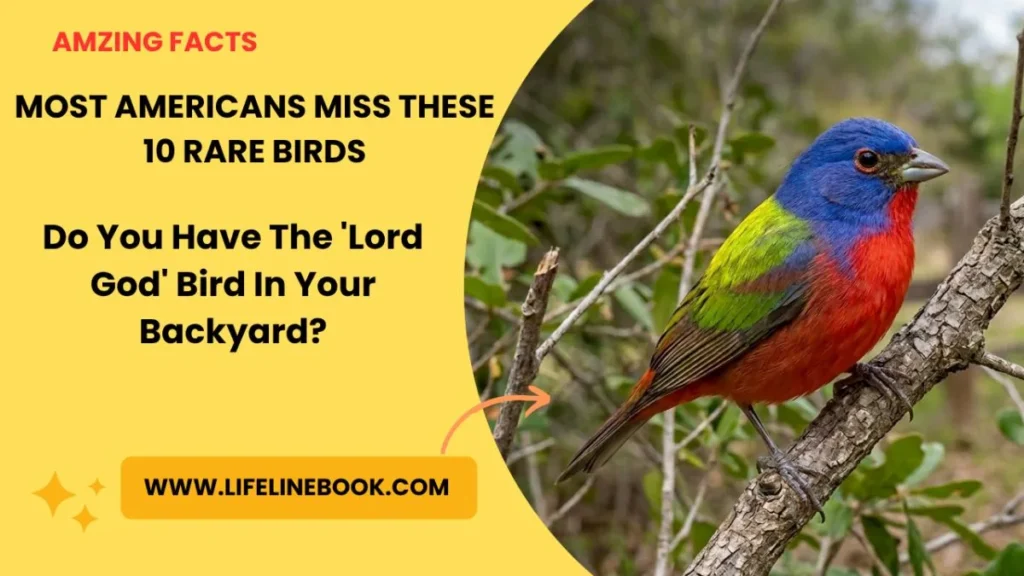
Howdy, neighbor. Pull up a chair and grab a cold glass of sweet tea. (How to Identify 10 Rare Birds in North America) If you’re sitting there on your porch, looking out at the tree line and wondering what that flash of blue or odd-looking beak was, you’ve come to the right place. Most folks are happy seeing a common robin or a blue jay, but there’s a special kind of thrill when you spot something that most people only see in dusty old textbooks.
Identifying rare birds US isn’t just about having fancy binoculars; it’s about patience, a keen eye, and knowing exactly where the secrets are hidden in the woods. Whether you’re down in the Texas brush or up in the chilly pines of Maine, North America is home to some absolute feathered wonders if you know how to look. It’s like a treasure hunt that the Good Lord laid out for us, and the map is written in the wind and the trees.
The Golden Rule of Birding
Before we get into the “who’s who” of the sky, let me give you the best bird watching tips I ever received from my granddaddy: stop looking for the bird, and start looking for the movement. A rare bird doesn’t want to be found. It’s a game of hide and seek where the stakes are a memory that’ll last a lifetime. You need to understand avian identification basics—size, shape, and song—before you can claim you’ve seen a ghost.
Most beginners make the mistake of looking at the color first. But out in the wild, the light plays tricks on you. A bright red bird can look black as coal in the shadows. Look at the silhouette, the way it flaps its wings, and how it hops on a branch. That’s how the pros do it.
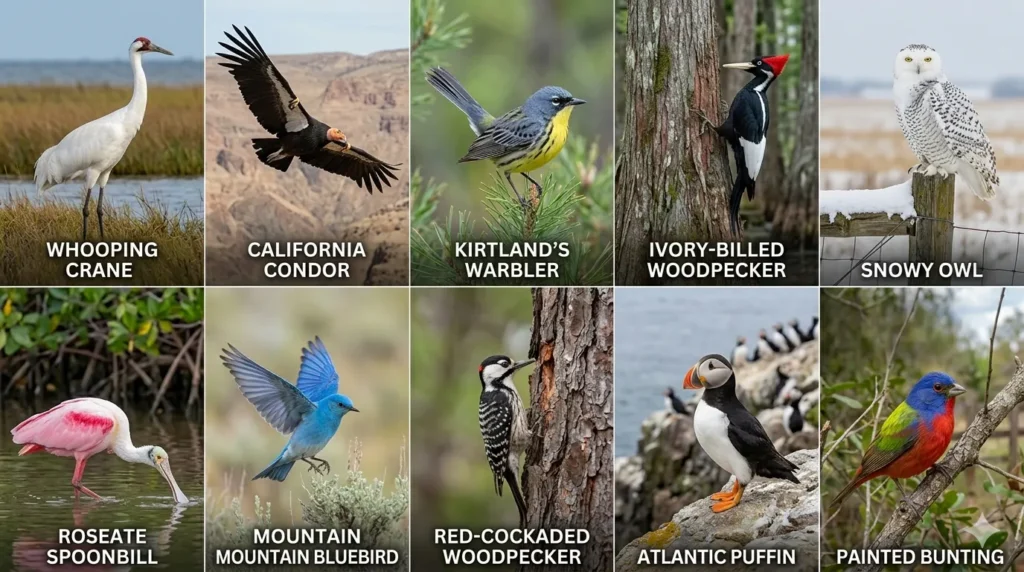
The Whooping Crane (The Tall Ghost of the Marsh)
You want to talk about rare birds US? You can’t start without the Whooping Crane. Standing nearly five feet tall, these are the giants of the marsh. Back in the 1940s, there were only about 20 of these beauties left in the whole wide world. They’ve made a comeback that’d make any underdog proud, but they are still a rare sight.
- How to Spot: Look for a bird that’s pure snowy white with black wingtips that you can only see when they spread those massive wings. They’ve got a patch of bright red skin on their head that looks like a small cap.
- The Sound: Their call is a loud, rattling “whoop” that can carry for miles over the water. It sounds like a bugle call at sunrise.
- Where: They love the coastal marshes of Texas in the winter (Aransas National Park is the spot) and the northern wetlands like Wood Buffalo National Park in the summer.
California Condor (The Prehistoric Shadow)
Now, this bird is something straight out of a legend. With a wingspan of nearly ten feet, when a California Condor flies over you, the ground practically goes dark. This is one of the most critical rare species sightings you can ever hope for. They were extinct in the wild at one point, and every bird you see today is a miracle of science and grit.
- How to Spot: They have a naked orange or pinkish head and massive black wings with distinct white patches underneath (called coverts).
- The Behavior: These birds are scavengers. They don’t hunt; they wait. If you see a group of birds circling something way up high, look for the one that isn’t flapping. A Condor can soar for miles without moving a muscle.
- Rural Tip: Don’t confuse them with a turkey vulture. Vultures rock side-to-side like a drunk sailor; a Condor is steady as a freight train on a straight track.
Kirtland’s Warbler (The Jack Pine Jewel)
This little fella is what we call a “specialist.” He’s real picky. He only likes young Jack Pine trees in Michigan that are about 5 to 15 feet tall. If the trees get too old, he packs his bags and leaves. This bird is the reason why some folks actually start controlled fires—to keep the young pines growing.
- Identification: Look for a bright yellow belly with black streaks on the sides and a bluish-gray back.
- The Tell: They constantly wag their tails up and down—it’s like they’ve got too much caffeine in their system and can’t sit still for a second.
- Bird Watching Tips: Listen for a loud, chirpy song that sounds like “flip-flip-flip-cherry-wheat!” It’s surprisingly loud for such a tiny creature.
Ivory-billed Woodpecker (The “Lord God” Bird)
I’ll be honest with you, neighbor—this one is the Holy Grail. Some folks in white lab coats say it’s extinct; but old-timers in the south swear on their mama’s Bible they’ve seen it in the deep, dark swamps of Arkansas or Louisiana. It’s called the “Lord God” bird because that’s what folks holler when they see one: “Lord God, look at that bird!”
- The Secret: If you’re deep in a cypress swamp and you hear a “double-knock” on a tree—thump-thump—you better stop breathing and start recording.
- What to Look For: It’s bigger than a crow, with a huge ivory-colored beak and a white “V” on its back when it’s perched. If you find one, you’ll be the most famous person in the birding world overnight.
🌿 Where is Luxury Without Nature?
Discover why true wealth isn’t found in crowded cities but in peaceful village life. Explore 5 powerful reasons why nature-rich living offers more luxury, balance, and happiness.
Read Full Article →Snowy Owl (The Arctic Visitor)
Every few years, the lemming population up in the Arctic crashes, and these white beauties fly down south looking for a snack. We call this an “irruption.” Seeing a Snowy Owl sitting on a fence post in a frozen Kansas farm field is a sight that’ll stop your heart.
- Avian Identification: They are almost pure white with varying amounts of black spotting. They have huge, bright yellow eyes that seem to look right through your soul.
- Where to Look: They don’t like trees. Remember, they come from the tundra where there are no trees. They like flat, open spaces that look like home. Check beach dunes, airport fields, or large hay meadows.
Roseate Spoonbill (The Pink Mystery of the Bayou)
Folks often mistake these for Flamingos because of that bright pink color, but the Spoonbill is a different breed entirely. They’ve got a much cooler “spoon” for a beak that they swing back and forth in the water to catch minnows and shrimp.
- Identification: Bright pink feathers, a white neck, and a flat, spatula-like bill.
- The Hunt: You’ll find them in the coastal mangroves and marshes of Florida, Louisiana, and Texas. When they fly, their pink wings against a blue sky look like a painting come to life. It’s one of those feathered wonders that reminds you how creative Nature can get.
Mountain Bluebird (A Piece of Fallen Sky)
While the common Eastern Bluebirds are all over the place, the Mountain Bluebird is something special. It’s a deeper, more heavenly shade of cerulean. There’s no rust-color on its chest—just pure, unadulterated blue.
- Where: You’ll find them in the wide-open cattle country of the Western US.
- The Movement: They have a unique habit of hovering over a field, flapping their wings rapidly while staying in one spot, looking for an insect. It’s like watching a tiny cerulean helicopter at work.
Red-cockaded Woodpecker (The Pine Specialist)
This bird is a true Southerner, through and through. It only lives in old-growth longleaf pine forests. What’s crazy is that they peck holes around their nest to make the pine sap bleed. That sticky sap protects their babies from snakes. Smart, right?
- How to Spot: Look for a small woodpecker with a large white cheek patch and a “ladder” pattern of black and white on its back.
- Rare Species Sightings: Because we’ve cut down so many old pine forests, these birds are struggling. Finding a “cluster” of their nest trees is a rare treat for any bird watcher.
Atlantic Puffin (The Sea Clown of the North)
Up in the Northeast, particularly Maine, these birds are the stars of the show. They look like little tuxedo-wearing parrots. They spend about 8 months of the year way out in the middle of the Atlantic Ocean, sleeping on the waves. They only come to the rocky islands to breed.
- Bird Watching Tips: You’re gonna need a sturdy boat and some decent birding gear for beginners to see these guys. They nest in burrows under the rocks.
- The Look: That huge, colorful beak is only bright during the summer. In the winter, it turns a dull gray. Nature is funny that way.
Painted Bunting (The Rainbow Bird)
I saved the best for last, my friend. If you ever see a male Painted Bunting, you won’t believe your eyes. It looks like a kid took every crayon in the box—red, blue, green, yellow—and colored one bird just for fun.
- Identification: Blue head, bright green back, and a vivid red belly.
- The Trick: Even though they are bright, they are shy. They love to hide in thick brush and “thickets.” The best way to see one is to put out some white proso millet in a feeder near some dense bushes in the Southern US.
Understanding the North American Flyways
If you want to get serious about rare birds US, you gotta understand the “highways” in the sky. We call these North American flyways. There are four main ones: The Atlantic, The Mississippi, The Central, and The Pacific.
During the spring and fall, millions of birds use these routes. If you live near a “stopover” point—like a large lake or a forest patch—you might see a rare bird that’s just stopping for a quick nap and a snack on its way to South America. This is the best time for rare species sightings. Keep your binoculars by the window!
Essential Birding Gear for Beginners (The Rural Edition)
You don’t need a mortgage-sized loan to start birding, but a few things will make your life easier:
- Binoculars: Look for “8×42.” The ‘8’ means it magnifies 8 times, and the ’42’ lets in enough light so you can see in the woods.
- Field Guide: A good old-fashioned book like ‘Sibley’ or ‘Peterson’ is better than a phone app when you’re out in the sticks with no cell service.
- A Wide-Brimmed Hat: Trust me, staring at the sky all day will give you a nasty sunburn if you ain’t careful.
- Patience: This is the most important piece of gear. If you go stomping through the brush like a startled deer, you won’t see a thing. Sit still. Let the woods forget you’re there.
Why We Protect These Feathered Wonders
You might be thinking, “Bhau, it’s just a bird. Why all the fuss?” Well, it’s like this: these birds are the “canaries in the coal mine.” When the Kirtland’s Warbler or the Whooping Crane starts to disappear, it tells us that our water isn’t as clean as it should be, or our forests are getting too thin.
By keeping an eye on these rare birds US, we are actually keeping an eye on our own home. Plus, there’s something peaceful about it. In a world that’s always shouting at you through a screen, the simple song of a rare bird is a reminder that the world is still a wild and beautiful place.
Reliable Resources for Your Birding Journey | How to Identify 10 Rare Birds in North America
Don’t just take my word for it. If you want to become a local expert, use these tools to track your finds and learn the ropes:
| Resource Name | What It’s Good For | Type of Resource |
| eBird (Cornell Lab) | Finding where rare birds US were seen yesterday | Mobile App / Website |
| Audubon Field Guide | Deep dive into avian identification and bird calls | Digital & Print Guide |
| All About Birds | Watching videos of bird behavior and learning songs | Educational Website |
| American Birding Association | Learning the “Code of Ethics” for birders | Professional Organization |
| National Wildlife Federation | Tips on making your backyard bird-friendly | Non-Profit Org |
| Merlin Bird ID | Identifying a bird by just uploading a photo | AI-Powered App |
Final Thoughts from the Porch:
Identifying these 10 birds is just the start. North America has over 800 species waiting for you. So, what are you waiting for? Grab your gear, head out to the back 40, and keep your eyes on the skies.
And hey, if you happen to see that Ivory-billed Woodpecker, don’t forget to call your old pal and tell me all about it! Why not share this guide with your hunting or hiking buddies? Maybe they’ve seen something “rare” and didn’t even know it!
Disclaimer
The information provided in this blog post is for educational and entertainment purposes only. While every effort has been made to ensure accuracy, bird sightings in the wild are never guaranteed, and certain species listed are critically endangered or may be considered extinct by some authorities. Always practice ethical birding by maintaining a respectful distance from wildlife and following all local, state, and federal land regulations. Do not trespass on private property in search of sightings.

Blogger Nitin
Hello, my name is Nitin, and I am a Blogger and Content Writer. I have 6+ years of experience in the IT field. I started working in the blogging field in 2023. I write content on trending topics and facts, and I also work as a freelancer.