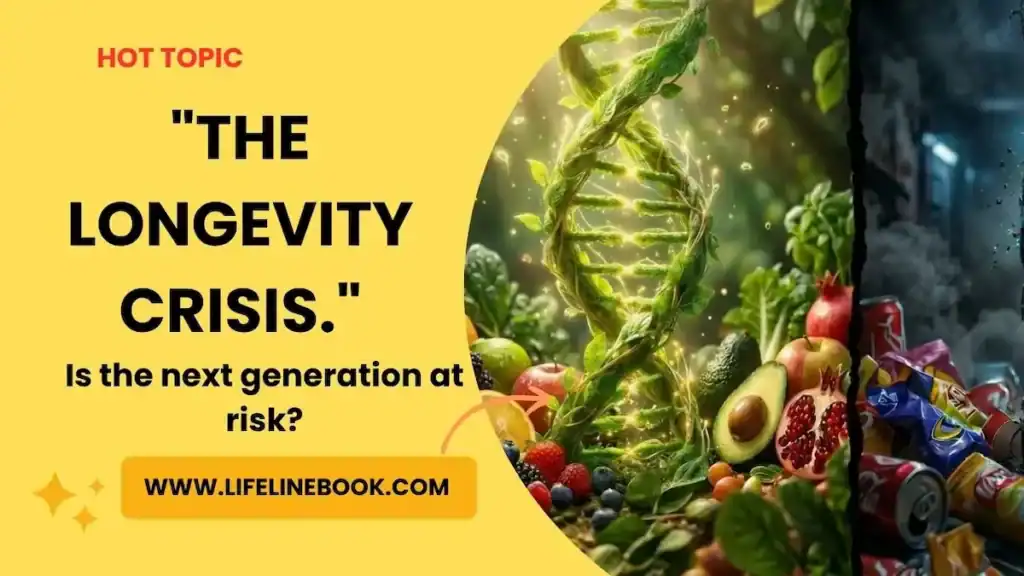
Human Life Expectancy is currently at a biological crossroads. Despite our unprecedented access to advanced medicine, high-speed technology, and global connectivity, we are witnessing a terrifying paradox: for the first time in modern history, the projected lifespan of the next generation is beginning to stall, and in some regions, actually decline.
This isn’t just a minor statistical dip; it is a fundamental shift in the human story. As we navigate the complexities of the 21st century, we must ask the uncomfortable question—are we inadvertently sabotaging the very biological foundation that allows us to thrive?
1. The Metabolic Decay of the Next Generation
The crisis begins in the cradle. When we discuss the decline of Human Life Expectancy, we aren’t just looking at the elderly; we are examining the biological foundation of our children. S. Jay Olshansky has already warned that childhood obesity is not just a cosmetic issue—it acts like a “biological anchor” pulling down future lifespan projections.
Today, diseases like Type 2 diabetes, hypertension, and fatty liver are no longer adult-only conditions. Children are entering adolescence with metabolic dysfunctions that were once seen in 50-year-olds. This early exposure creates a long-term physiological burden, leading to accelerated cellular aging. ‘
The consumption of high-fructose corn syrup and refined seed oils is fundamentally altering their insulin sensitivity before they even reach adulthood. Moreover, ultra-processed food consumption, excessive screen time, and lack of outdoor activity are compounding the issue. These lifestyle factors are rewiring children’s metabolism, making insulin resistance and chronic inflammation the new “normal.” If this trend continues, the steady rise of Human Life Expectancy could reverse permanently, making the 20th century a rare period of health growth rather than a lasting trajectory.
Understanding the decline in Human Life Expectancy is incomplete without analyzing how our screens and devices are rewiring our biology. Explore our deep dive into the modern digital struggle:
2. The Chemical Burden and Cellular Aging
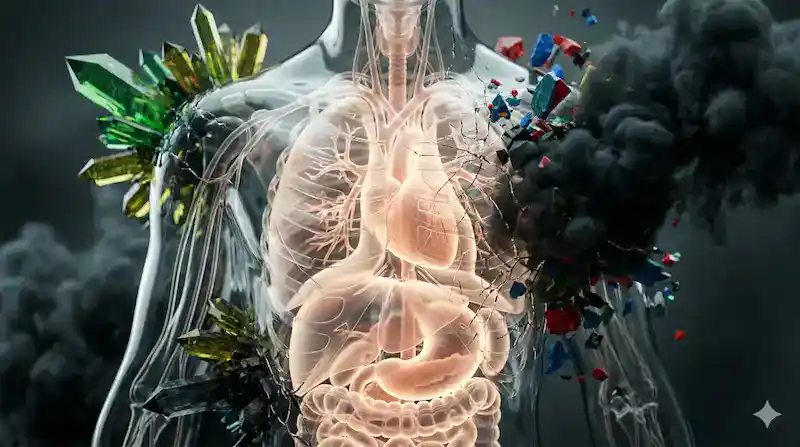
We are living in an era where the human body is constantly exposed to a vast array of synthetic chemicals. This invisible burden is silently eroding Human Life Expectancy at the cellular level. From PFAS (“forever chemicals”) in water to microplastics found in human organs, our bodies are dealing with substances they were never biologically designed to process. These endocrine disruptors mimic natural hormones, leading to reproductive issues and thyroid dysfunction.
The most dangerous effect is on telomeres, the protective caps of our DNA. When these telomeres shorten rapidly due to environmental stress and oxidative damage from pollution, cells lose their ability to regenerate efficiently. This accelerates biological aging even if the chronological age is young. Additionally, long-term chemical exposure contributes to immune dysfunction, making the body more susceptible to chronic inflammation and autoimmune diseases. We see this in the rising rates of early-onset cancers and neurodegenerative disorders. In essence, we are unknowingly trading long-term Human Life Expectancy for short-term industrial convenience and comfort.
3. The Healthspan Gap and Modern Healthcare Failure
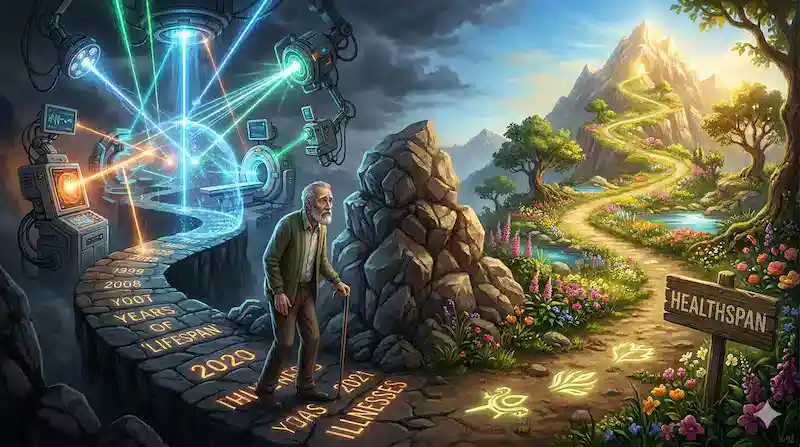
The modern healthcare system is highly advanced, yet it is failing at its core mission—improving Human Life Expectancy in a meaningful way. This paradox is most visible in the “healthspan vs lifespan” debate. While people may technically live longer due to medical intervention, a significant portion of their later years is spent battling debilitating chronic diseases. We are effectively keeping people alive in a state of decay.
The healthcare industry is primarily reactive, focusing on treating symptoms with pharmaceuticals rather than addressing root causes. This “sick-care model” relies heavily on lifelong medications like statins or metformin, which often come with side effects that further degrade the quality of life. Furthermore, rising stress levels, poor dietary habits, and lack of physical activity are overwhelming even the best medical advancements. Without a shift toward preventive care and ancestral health principles, any marginal increase in Human Life Expectancy will remain a superficial achievement rather than a genuine improvement in human well-being and vitality.

4. The WHO Warning: Lifestyle Diseases as the New Pandemic
The World Health Organization has identified non-communicable diseases (NCDs) as the leading threat to Human Life Expectancy globally. Unlike infectious diseases, these are self-inflicted through lifestyle choices and environmental mismatches. Heart disease, stroke, diabetes, and chronic respiratory conditions are now responsible for the majority of deaths worldwide, often striking individuals in their prime working years.
These diseases stem from a fundamental mismatch between our evolutionary biology and our modern environment. Humans are genetically programmed for intermittent movement, nutrient-dense whole foods, and natural light cycles. However, modern life promotes chronic sedentary behavior, artificial blue light at night, and calorie-dense but nutrient-poor diets. This creates a perfect storm of metabolic dysfunction and chronic low-grade inflammation. Over time, this systemic decline leads to organ failure and a direct impact on Human Life Expectancy. If not addressed urgently through policy changes and individual awareness, lifestyle diseases could become the defining health crisis that bankrupts nations and shortens generations.
5. The Lifeline Solution: Reclaiming Our Biological Design
Reversing the decline in Human Life Expectancy requires a radical return to biological fundamentals. The solution does not lie in more medications but in restoring harmony between our bodies and our environment. First, nutritional integrity must be prioritized; shifting away from “food-like products” to ancestral, whole foods provides the essential micronutrients needed for cellular repair. Eliminating ultra-processed foods can significantly reduce systemic inflammation within weeks.
Second, functional movement is crucial; the human body requires daily mechanical loading to maintain bone density and cardiovascular health. Simple habits like walking 8,000–10,000 steps or incorporating resistance training can dramatically improve metabolic health. Third, circadian alignment must be restored through proper sleep hygiene and morning sunlight exposure, which regulates the hormonal rhythms essential for longevity. Lastly, mental health and stress management play a vital role; chronic stress keeps the body in a “fight or flight” mode, elevating cortisol and accelerating cellular aging. This “Lifeline approach” is not a temporary trend—it is a return to the biological principles that sustained human life for thousands of years and is the only way to safeguard Human Life Expectancy.
Conclusion: A Call to Biological Awareness
The decline in Human Life Expectancy is not an unavoidable fate—it is a warning signal from our biology. We are at a turning point where our choices will determine the health of future generations. If we continue on the current path of physical inactivity and chemical dependency, we risk becoming the first generation whose children live shorter lives than their parents. However, by embracing preventive health, fundamental lifestyle changes, and deep biological awareness, we can reverse this trend. The future of Human Life Expectancy depends not on advanced technology alone, but on our willingness to align our modern lives with our ancient natural design. The time to act is now.

Blogger Pravin
Hello, my name is Pravin, and I am a blogger and digital marketing professional. I have 5 years of experience in the IT field. I started my blogging journey in 2023. I write content on trending topics and finance, and I also work as a freelancer.
To better understand the systemic decline in Human Life Expectancy, we recommend reviewing these official scientific reports from global health leaders: